
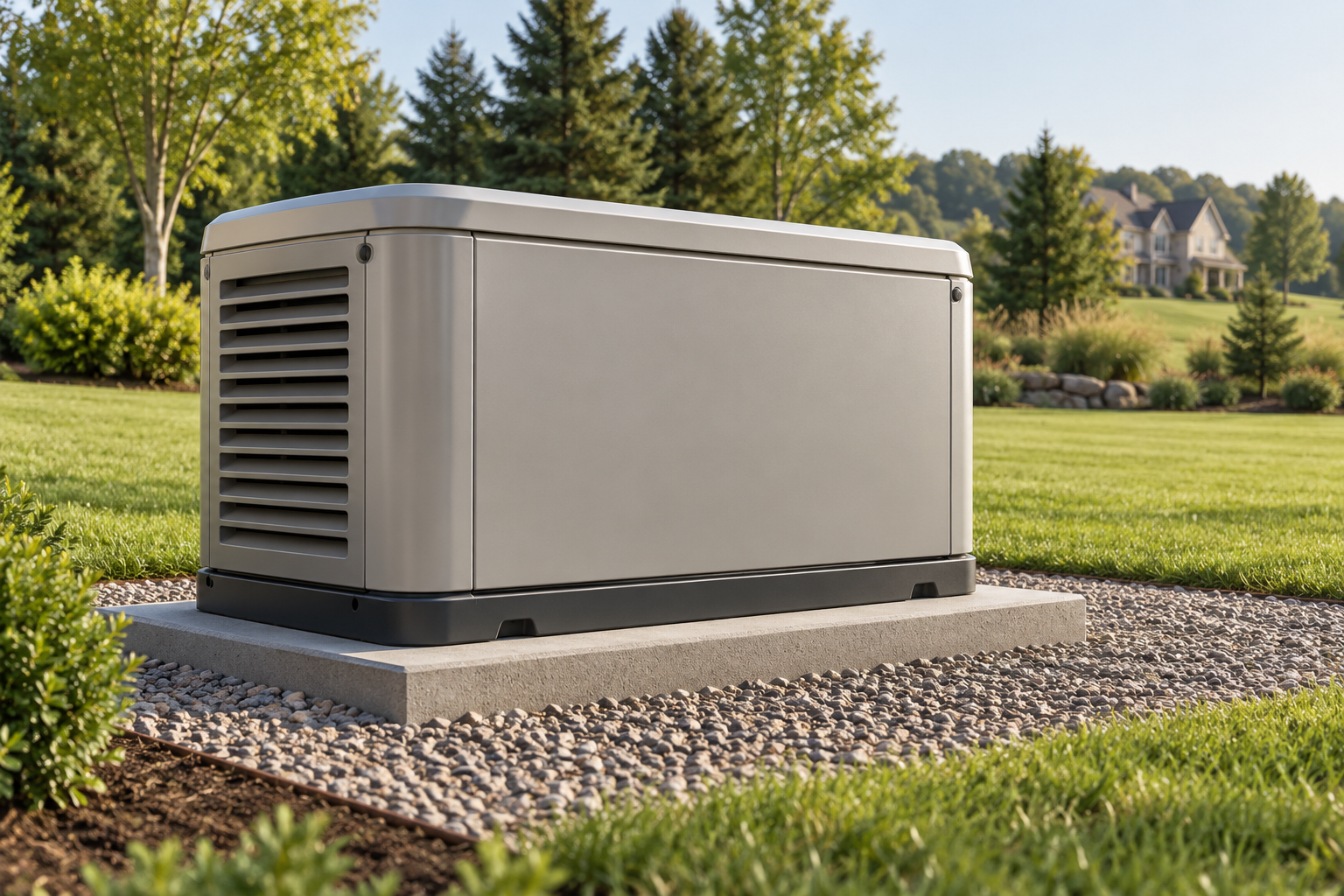
What belongs in the installation scope?
A complete proposal should connect the generator to the rest of the system: the fuel supply, suitable transfer equipment, the circuits to be supported and an appropriate outdoor location.
Essential-load backup focuses on selected priorities. Broader home coverage may still need load management or limits on simultaneous equipment use. Ask the proposed installer to explain what the system will and will not run before you choose equipment.
- Generator model and proposed capacity, based on the loads assessed.
- Transfer equipment and any electrical work or circuit changes.
- Generator base, placement, fuel work and site preparation.
- Permit coordination, inspection, testing and owner handover responsibilities.
What needs to be checked at the property?
Available fuel, electrical service, access and a suitable outdoor location affect the plan. Existing natural gas service alone does not establish sufficient supply capacity; propane planning likewise needs an equipment-specific fuel assessment.
Placement must follow the chosen model’s instructions and the applicable local requirements. Openings, ventilation, maintenance access and exhaust pathways matter. A photograph or a generic clearance number cannot establish a compliant installation.
For a new house or a major renovation, raise generator planning before the electrical, fuel and site designs are finalized. The builder and qualified providers can coordinate the intended backup scope without relying on a generic pre-wire specification.
Compare written proposals for the same work
Two quotes can look different because they include different electrical work, fuel work, equipment or handover. Ask each provider to identify exclusions and who is responsible for approvals, inspections and any required utility coordination.
There is no dependable site-wide price until the property and work are assessed. A quote should state the equipment, work included, payment terms and conditions that could change the total.
- Which loads are included, and which loads may be managed or excluded?
- Who confirms fuel capacity and completes any required fuel work?
- Who checks the permit authority and obtains the required approvals?
- What inspection, commissioning and maintenance information is included?
Know what happens at handover
Ask for the equipment identification, relevant manuals, the agreed maintenance information and a record of the work and system testing. The provider should explain normal owner observations and how to report an alert.
A standby system is not a promise of uninterrupted electricity or a substitute for a separate plan for critical medical needs. The written scope and the actual equipment capabilities determine what is supported.