
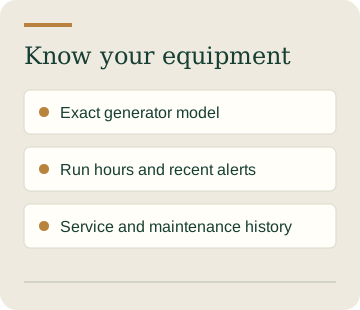
Which details determine the service?
The model, run hours, service history, fuel type and any visible alert help the proposed provider identify the right maintenance requirements. Share what you already know; do not open equipment or reach unsafe areas to find a label.
How is the interval chosen?
Use the maintenance schedule for the exact generator model. Elapsed time, run hours, operating conditions and any break-in requirements can affect what is due.
Extended outage running may change the next service requirement. Ask the provider to review the applicable manual and the actual run history rather than applying one interval to every generator.
What may a maintenance visit cover?
Ask which model-specific checks and service tasks the visit includes, and whether consumables, battery-related checks or transfer-system testing are included or quoted separately. A maintenance inquiry alone does not establish that every item is part of a visit.
Have the provider explain what is due from the matching schedule and record the work actually completed. Report current faults separately so a routine service visit is not mistaken for an agreed repair.
What changes after extended running?
If your generator has run for an extended period during an outage, note the total run hours and any fault codes that appeared. Follow the manufacturer’s post-outage inspection recommendations. A qualified technician can check for wear, change fluids, and confirm the system is ready for the next event. Keep records of run hours, dates, alerts, and any service performed.