
Why manage loads?
A load-management design can delay or disconnect selected loads so they do not all demand generator power at the same time. The equipment and priority settings determine which loads are controlled and when.
Ask what remains available, what may pause, and how the owner will understand that behavior. Load management changes the way supported equipment operates; it does not create unlimited capacity.
What equipment must work together?
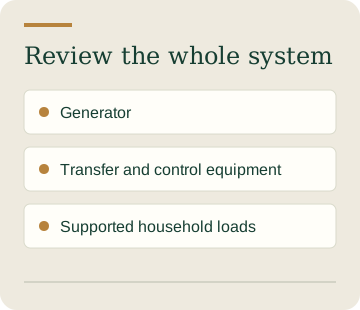
The generator, transfer arrangement, control devices and connected loads must be assessed for compatibility. Different systems use different controls; an existing component is not automatically suitable because it fits the same broad equipment category.
Ask the proposed provider to identify the compatible components, the intended priorities and the commissioning checks for that design.
What does load management not replace?
Load management does not replace an assessment of running loads, motor starting, fuel capacity and the conditions in which the system will operate. The supported combinations of loads still need to fit the equipment design.
Qualified providers must plan and carry out the applicable electrical work and approvals. Confirm the scope and inspection responsibilities for the actual property before changes are made.
When should it be reassessed?
If you add new high-demand equipment such as a heat pump, additional well pump, electric vehicle charger, or hot tub, the load management scheme may need to be updated. Reassess the system whenever your home’s electrical load profile changes significantly.